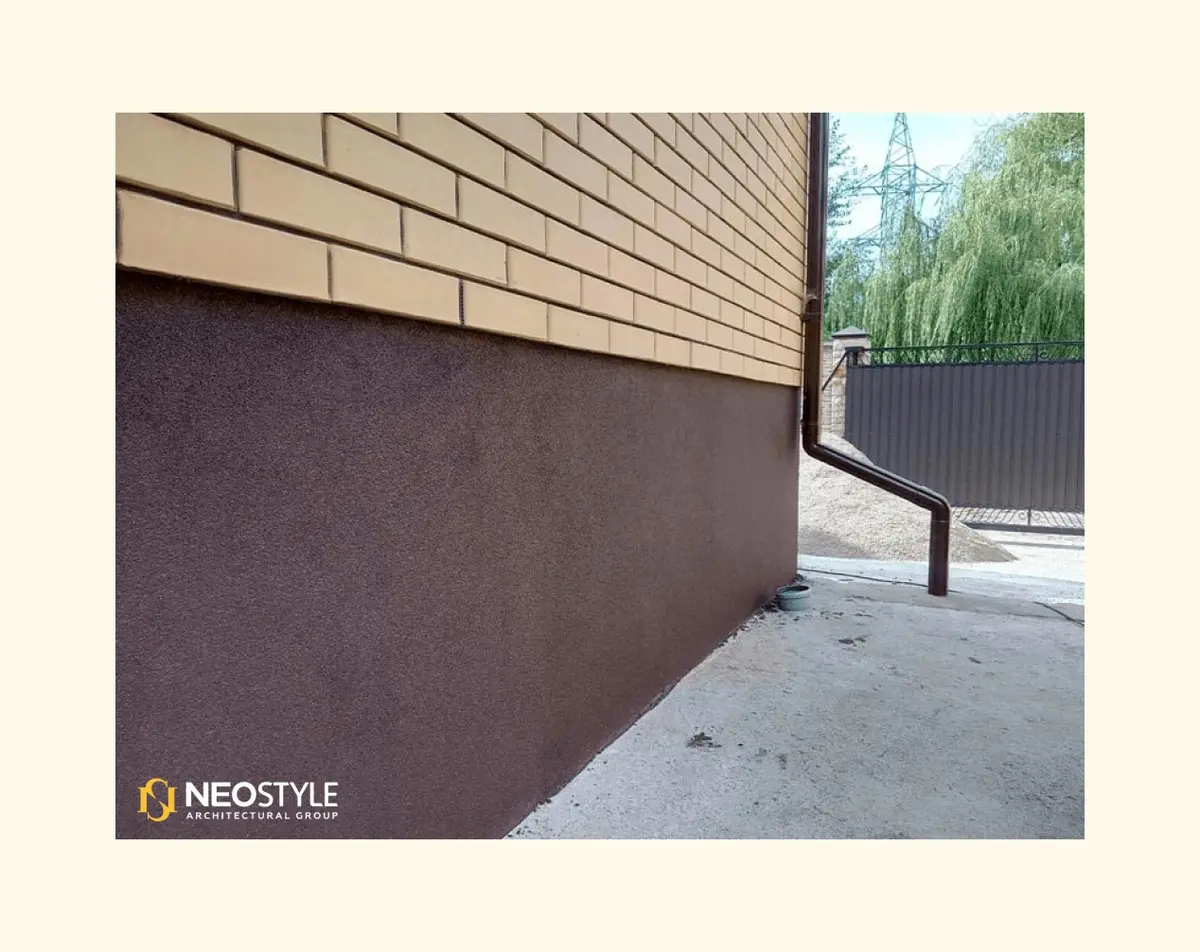
Plastering the foundation plinth of a house
Protection against external factors
The building plinth is closest to the ground and exposed to various external impacts such as collisions, moisture, mechanical damage, and weather conditions. Plaster provides an additional protective layer against these factors, preventing damage to the plinth walls and extending the building's lifespan.
Beautification and enhancing appearance
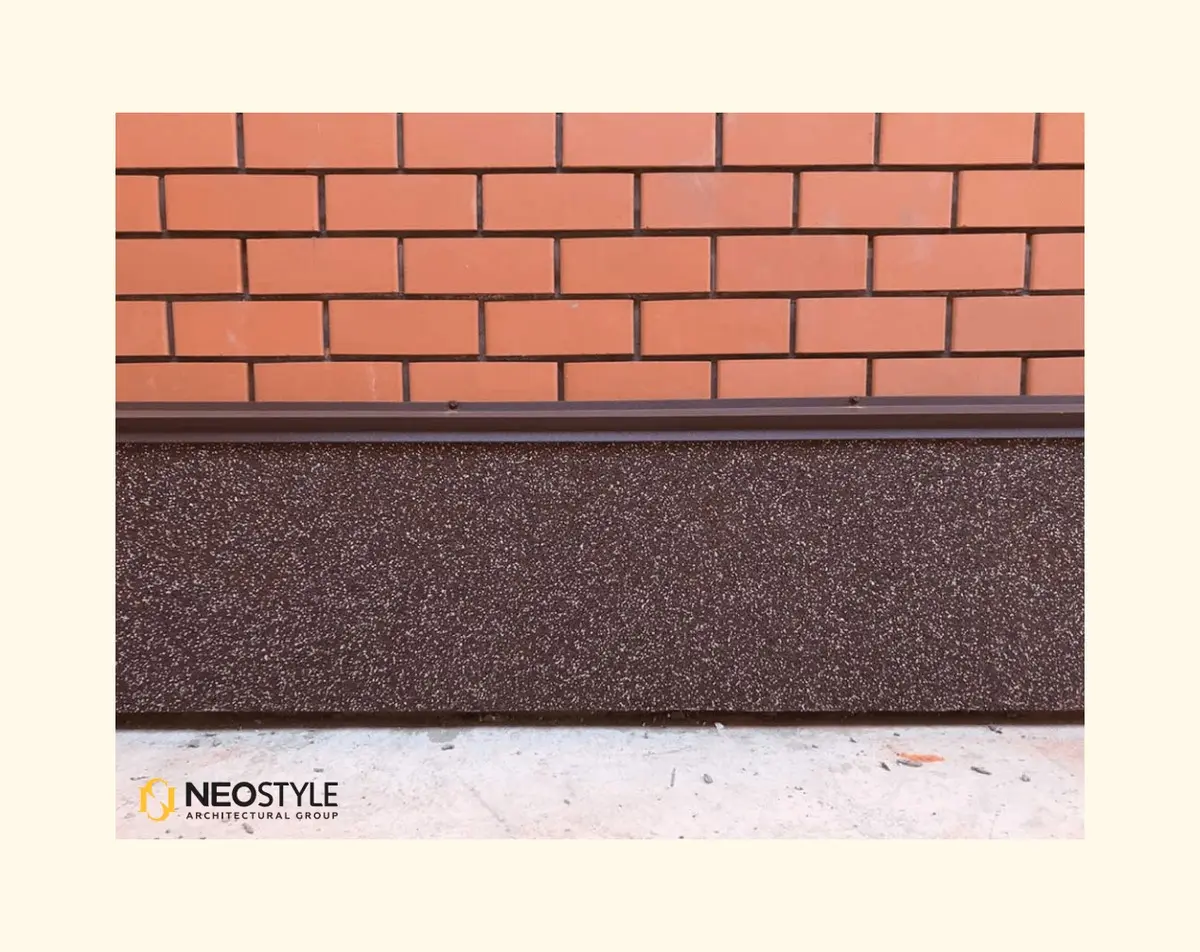
Plaster gives the house an elegant and appealing look. It can be applied in various textures and shades, allowing for the creation of a unique style and image of the home. Plaster is also capable of concealing irregularities and flaws on the plinth walls, giving them a smooth and even surface.
Improved insulation
The plaster layer on the plinth helps improve the building's thermal and acoustic insulation. It acts as an additional barrier, reducing the penetration of cold and outside noise. This can significantly increase indoor comfort and lower energy costs for heating and air conditioning.
Moisture resistance
The plinth is often exposed to moisture due to its proximity to the ground and potential precipitation. Plaster provides additional protection against water penetration into the walls, creating a water-resistant surface. This is particularly crucial in areas with high humidity or frequent precipitation.
Ease of maintenance
The plaster layer on the plinth features a smooth surface, making cleaning and maintenance simple. In case of dirt or stains, the plaster can be easily washed or rinsed with water. This keeps the home's plinth clean and fresh-looking for a long time.
Considering all these benefits, plastering the home's plinth is a practical and aesthetically pleasing solution that enhances the building's appearance, protects it from damage, and increases indoor comfort.
projects
Single-story houses
Two-story houses
Houses with an attic
Flat-roof houses
contact
Ask a question about the project
contacts