How to make the right choice of porcelain stoneware: 10 questions for a specialist
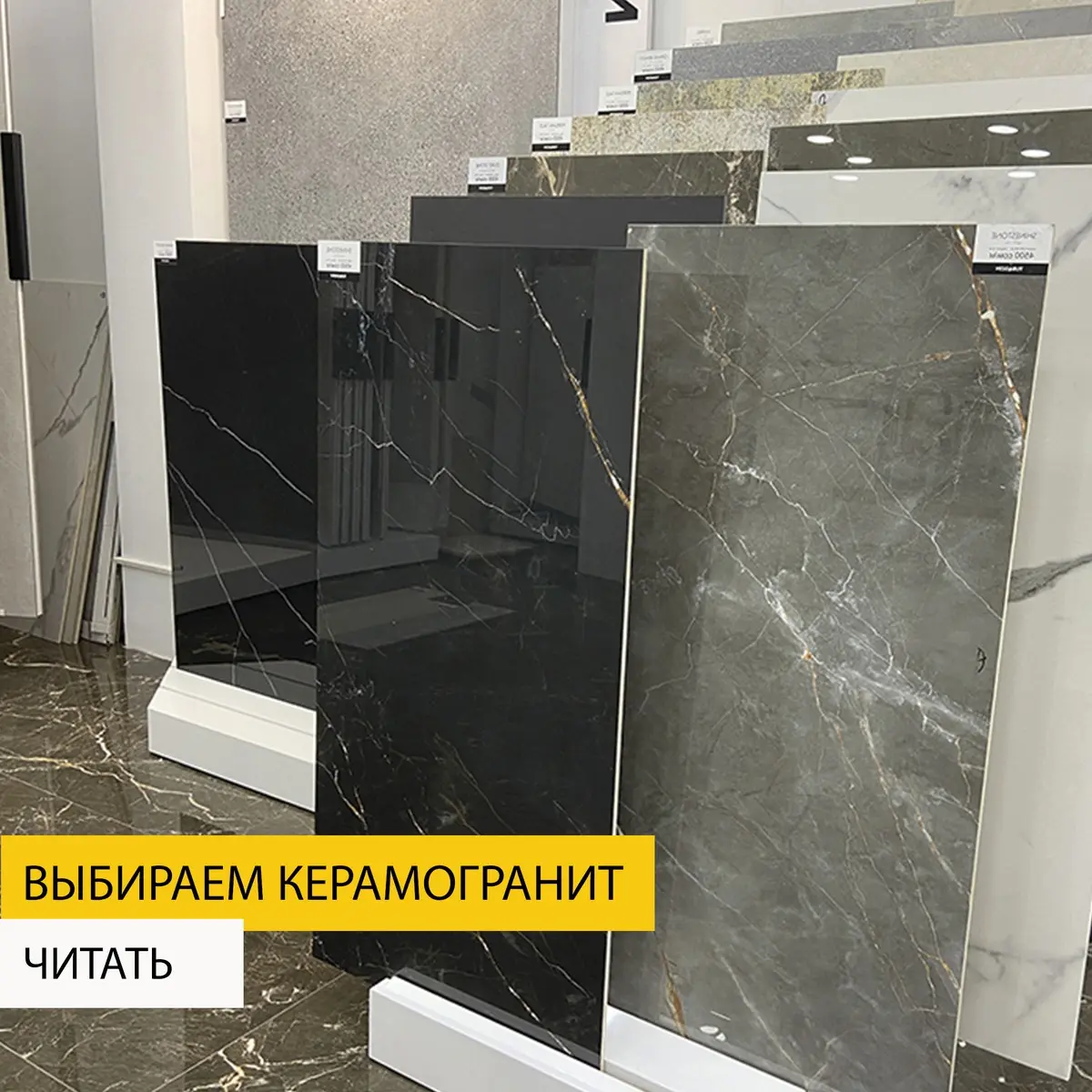
About 10 000 Kyrgyzstanis are searching for this information across the entire internet! And that's just in the last month! That's why we urgently conducted a survey among our clients and followers, gathered the most popular and important questions, and created a mini-guide: how to buy high-quality porcelain stoneware and make the right choice
Which is better: porcelain stoneware or ceramic tile?
I'll try to answer briefly — essentially, porcelain stoneware is one of the varieties of ceramics. Porcelain stoneware has all the advantages of ceramic tiles plus its own special characteristics — higher strength, high wear resistance (it can even be used as facade decoration), and low water absorption (virtually no pores). Put simply, its properties are very close to natural stone, hence the name.
However, there are drawbacks — the material is heavy (so, for example, it is difficult to fix onto a drywall structure) and harder to install (if mistakes are made during cutting, it can crack and chip).
To sum up — today, we increasingly recommend that our clients purchase porcelain stoneware, because its characteristics surpass conventional tiles. But! We always warn about the higher price (compared to ceramic tiles) and mention that only a qualified finishing team should work with such material.
Which porcelain stoneware should you choose?
I believe you already know that porcelain stoneware is divided into various types, categories, and classes... Naturally, it is easy to get confused in such a stream of information... That is why I always outline several important rules for purchasing building materials to our clients (not only for porcelain stoneware, they are universal)
1. Purchase materials in branded showrooms that value their reputation and provide a warranty for their products
2. If you worked with an interior designer, be sure to make all purchases of decorative finishing materials together with them. The designer's experience and knowledge will certainly come in handy, plus selecting colors and designs without a professional will be much harder.
3. Be sure to ask the showroom manager to tell you about the chosen material and how it differs from others. This will give you an understanding not only of your purchase, but also of the showroom itself and how well they understand what they sell.
What else should you pay attention to when buying?
I would also advise you to buy tiles from a single collection; that way you will be certain that all tiles have the same shade and caliber. If you have to purchase additional material from other collections or even another brand, be sure to pay attention to these indicators (they are usually indicated on the packaging or can be clarified with the manager).
Another important aspect — if you are going to lay porcelain stoneware without joints, you should purchase rectified material (which means with a straight, precise edge). This is important because with other types of material, you won't be able to achieve a seamless joint.
How to choose the size?
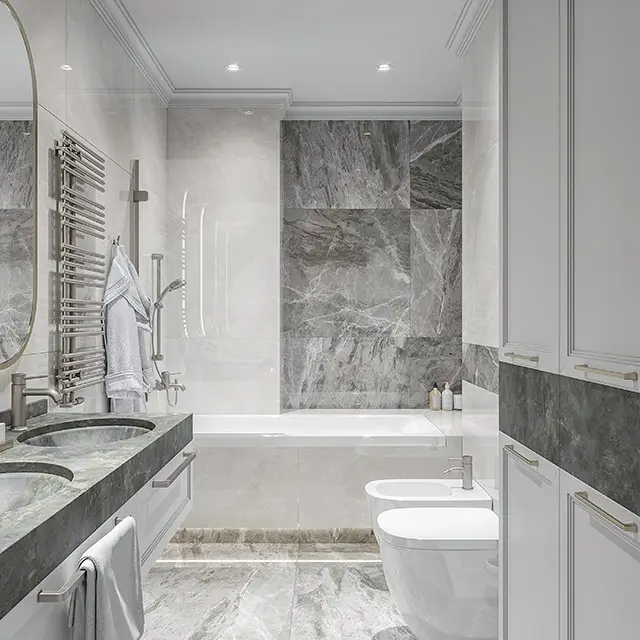
The rule here is usually: the bigger, the better. Large-format tiles are on trend! Especially if you are using porcelain stoneware for wall finishing — a seamless option or an option with the fewest joints is always preferable.
However, the larger the tile, the higher its cost. Therefore, for floor decoration, for example, you can also opt for medium-sized tiles.
How to calculate the required amount of material?
In principle, a showroom manager can always assist you with calculating the required amount of tiles. The most important thing is to calculate the surface area to be covered (walls or floor), subtract the area of windows and doors (if they occur along the way), and consider other configuration features of the room (projecting columns, etc.)
Each tile package indicates the surface area covered by the tiles in the box. This way you can roughly calculate how many boxes you need. Always buy with a reserve! Even if you have quite a lot of material left over, it can always be returned to the store.

What layout patterns are available?
In fact, there are numerous tile layout options — limited only by the designer's imagination... Here are the most common ones:
grid (stacked) layout;
running bond (brick pattern) or "herringbone" — these methods are most often used for rectangular "wood-look" porcelain stoneware
diagonal.
Sometimes multiple layout types can be combined within a single project: this makes it possible to highlight accents and zone the space.
And, for example, laying tiles diagonally helps visually expand the room's area.
When is a joint necessary?
Yes, indeed, completely seamless (monolithic) installation of porcelain stoneware is very popular right now, and undeniably — it looks the most impressive. But! In rooms with significant temperature fluctuations (loggias and terraces, for instance), where technical errors might have been made in the screed (perhaps not done by you), in new buildings where wall settling is possible, if you plan to install "underfloor heating", etc. — in such conditions I recommend laying tiles with a gap between them (starting from 2 mm — it all depends on the conditions mentioned above)
Additionally, be sure to provide expansion joints (or ask your site supervisor about them). They are placed along the perimeter and in corners. Special silicone is used for sealing them.
Which grout should you choose?
You have two options — cement-based or epoxy. The former is quite affordable, but porous and quickly absorbs dirt (which is why I recommend choosing dark, gray shades).

Epoxy grout is more expensive, but has absolutely no pores. Consequently, it does not get dirty, does not crack, does not yellow... in short, it withstands everything and looks flawless. According to the manufacturer, the service life of such a coating is over 50 years!
Can porcelain stoneware be used on floors throughout the entire apartment?
I would answer this question as follows: you can, but is it necessary? Porcelain stoneware has its downsides, which might be unacceptable to you...
1. It is stone, and consequently, a porcelain stoneware floor will be quite cold. This problem, of course, is easily solved by installing underfloor heating. But! Such floors will cost you more than laminate flooring.
2. Hardness. Falling on such a floor is unpleasant and even dangerous, so it's worth considering if there are many children in your home. And if you drop your smartphone, it will definitely need repair.
3. Installation should only be entrusted to professionals with specialized equipment (cutting porcelain stoneware is not an easy task at all!)
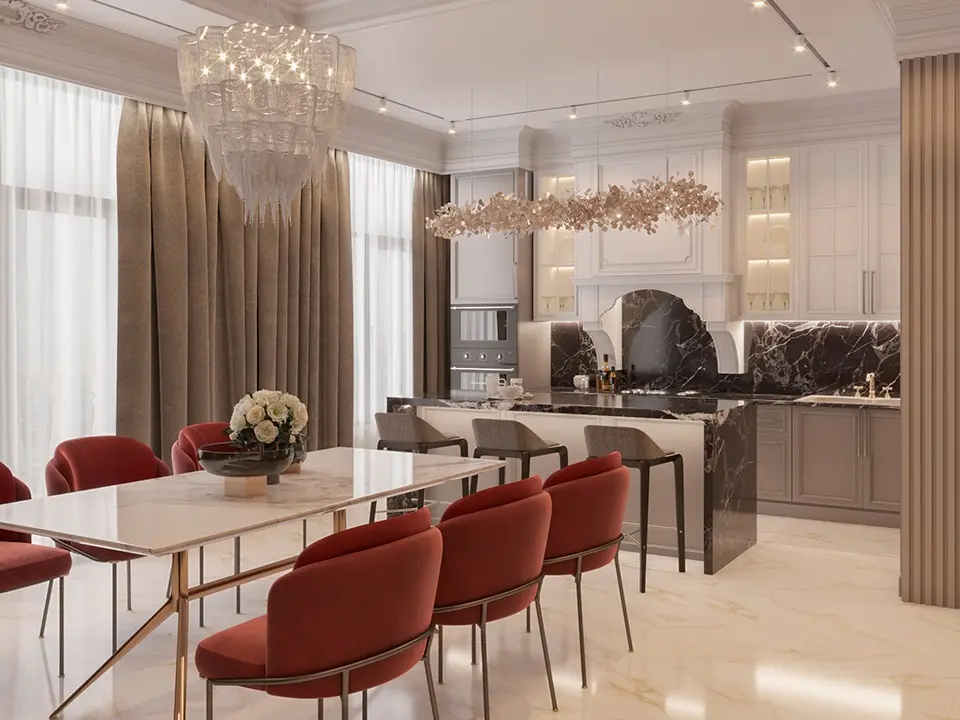
Weighing all the pros and cons, you will be able to answer whether porcelain stoneware flooring should be installed everywhere or only in specific areas (kitchen, hallway, and bathrooms).
I will only add that the trend of choosing porcelain stoneware for floor covering is actively growing. And nowadays, there are many porcelain stoneware collections with a wonderful imitation of wooden planks. It looks gorgeous in an interior.
Where else, besides backsplashes and bathrooms, can porcelain stoneware be used?
Virtually anywhere. Today, the scope of porcelain stoneware application is extremely wide. Here are a few of the most common examples, some from our projects, others from ceramic tile showrooms in our city.
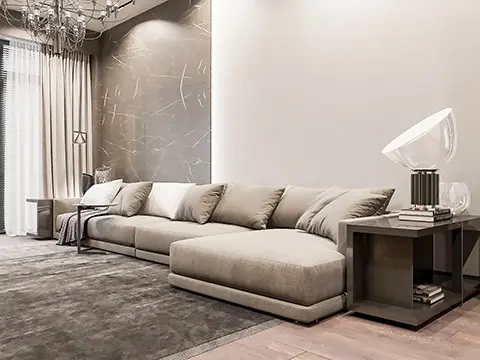
Marble-look porcelain stoneware panels in living rooms and bedrooms are one of the key trends of recent years. Such decor looks striking in any interior and any style.
Staircase steps cladding — impressive, durable, and beautiful.
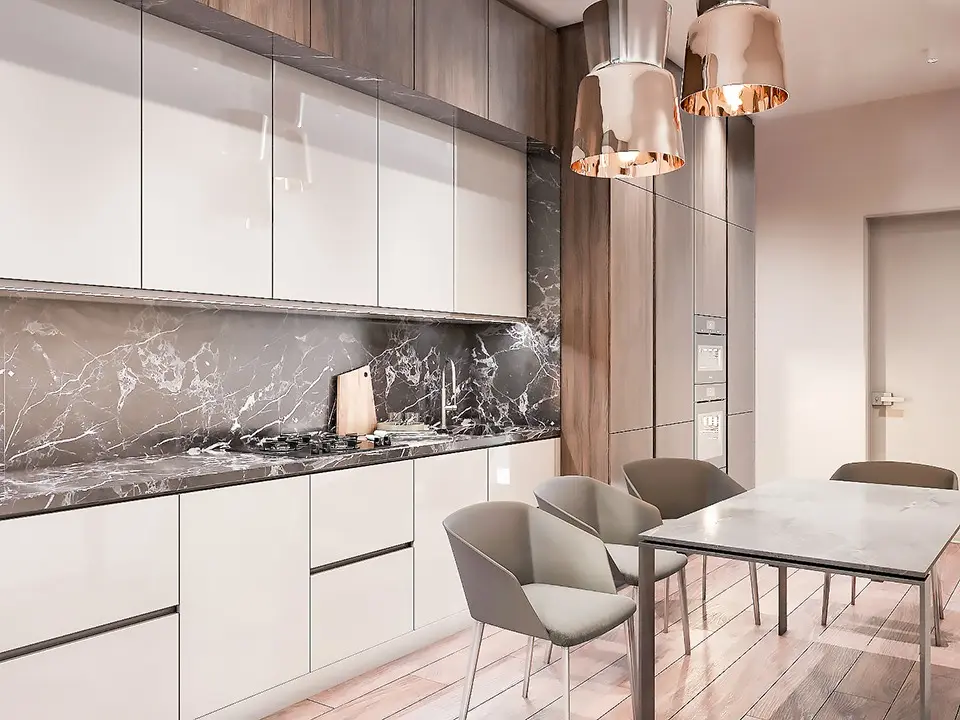
One of the interesting methods is using porcelain stoneware for furniture finishing: countertops, front panels, and sliding closet doors.
For instance, this is how the kitchen front and island are decorated in the Tubadzin showroom here in Bishkek
"Wood-look" porcelain stoneware laid in a "herringbone" pattern has become a wall accent. Also, take a look at the sliding closet door — it is finished with porcelain stoneware as well.
And, of course, the classic choice — a stone rug on the floor
We certainly have many more examples; they can be found in almost every one of our projects, so be sure to check out our portfolio section.
Hope this material was useful to you. Send all questions about the article and porcelain stoneware to our Instagram @neostyle.kg