Smart Kids' Room Renovation: 8 Design Tips
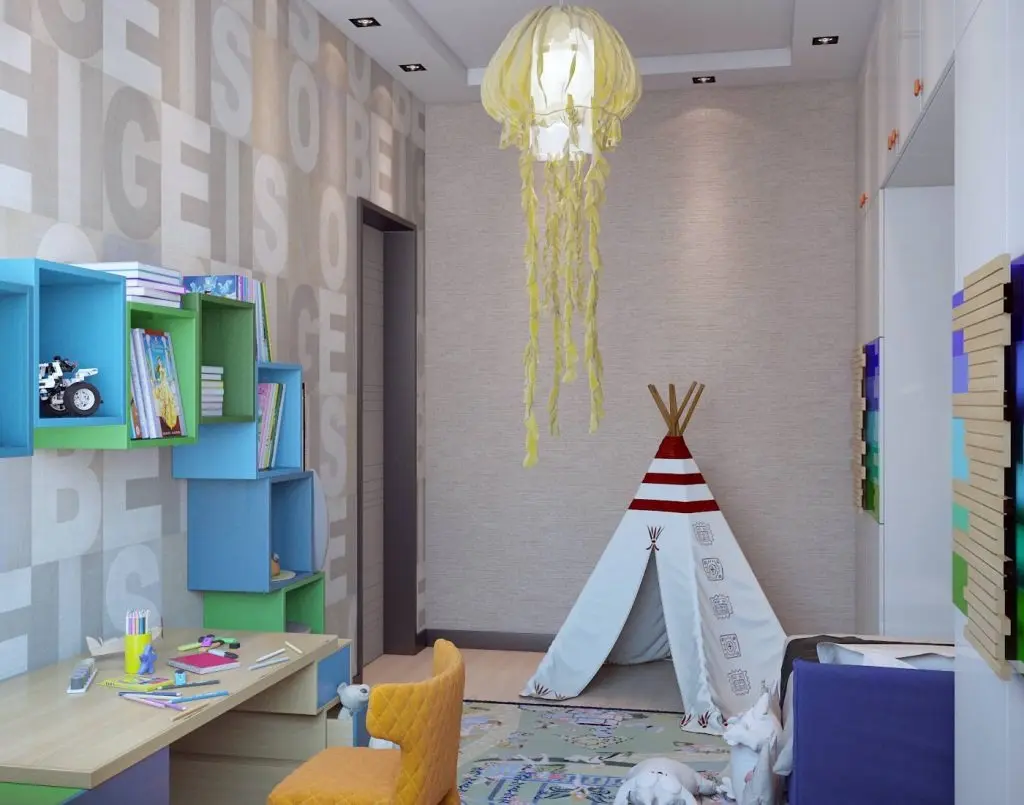
A kids' room is a special space! While other areas of your home primarily reflect your preferences and wishes, a child's room is their own territory. Your little one will most likely not want to choose wallpaper matching the furniture and curtains or hang a crystal chandelier from the ceiling… The most important advice when designing this room is to listen to your child's opinion and build the space around their wishes, while keeping ergonomics and safety in mind… Sounds challenging? Yes, it is complex, but not impossible! As an experienced designer, I can share several fundamental tips that will help you visualize and lay the groundwork for designing this space.
ZONING
Often, when creating a kids' room on their own (without a designer's help), adults don't realize just how many functions this space must serve. Here, a child needs to do homework, host friends, and let off steam… Therefore, make sure to plan out your layout. Outline all the functional areas your child needs. These, of course, will depend on age and personal preferences… It is also worth considering zones for future growth: for example, if your child is a preschooler, you should still prepare a study area where they will soon do homework.
At least four zones are essential: for play, rest, study, and sports. For a schoolchild or teenager, you can also add a reading nook, a wardrobe area, and a mini-lounge for hanging out with friends.
SAFETY
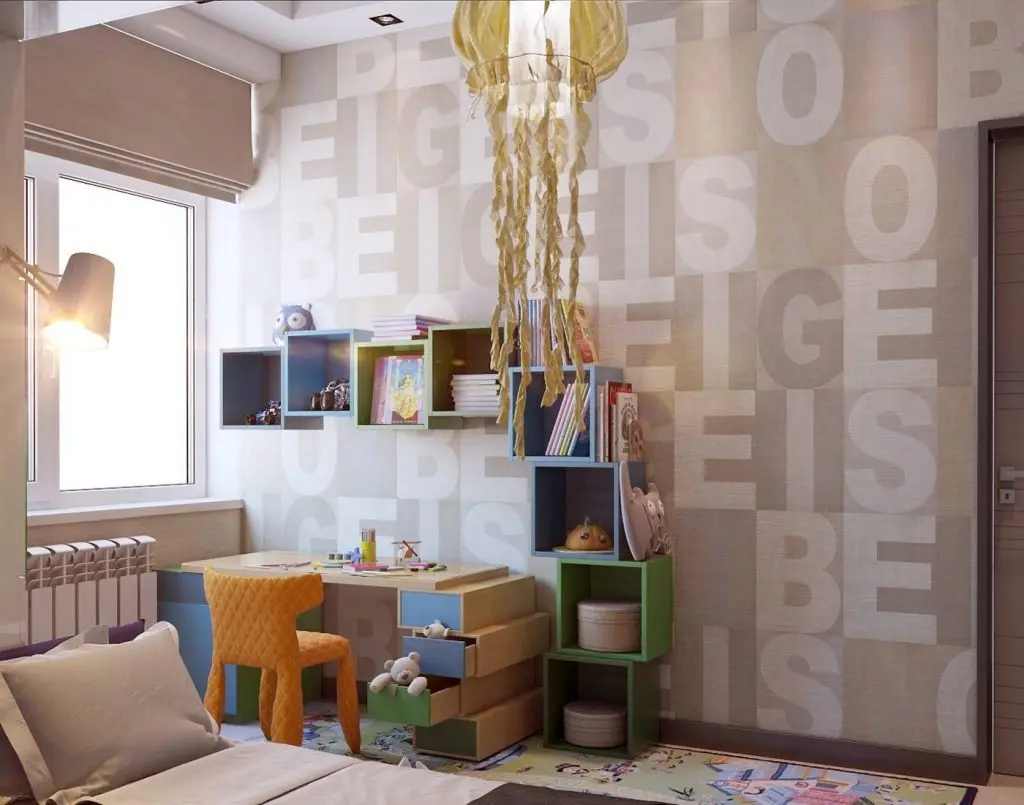
I won't try to convince you that safety is crucial, especially for a kids' room. That is already obvious. The real question is how to ensure it.
First, choose only eco-friendly materials (not necessarily natural, but strictly ECO-FRIENDLY—meaning manufactured in compliance with all relevant GOST standards and approved for use in children's rooms).
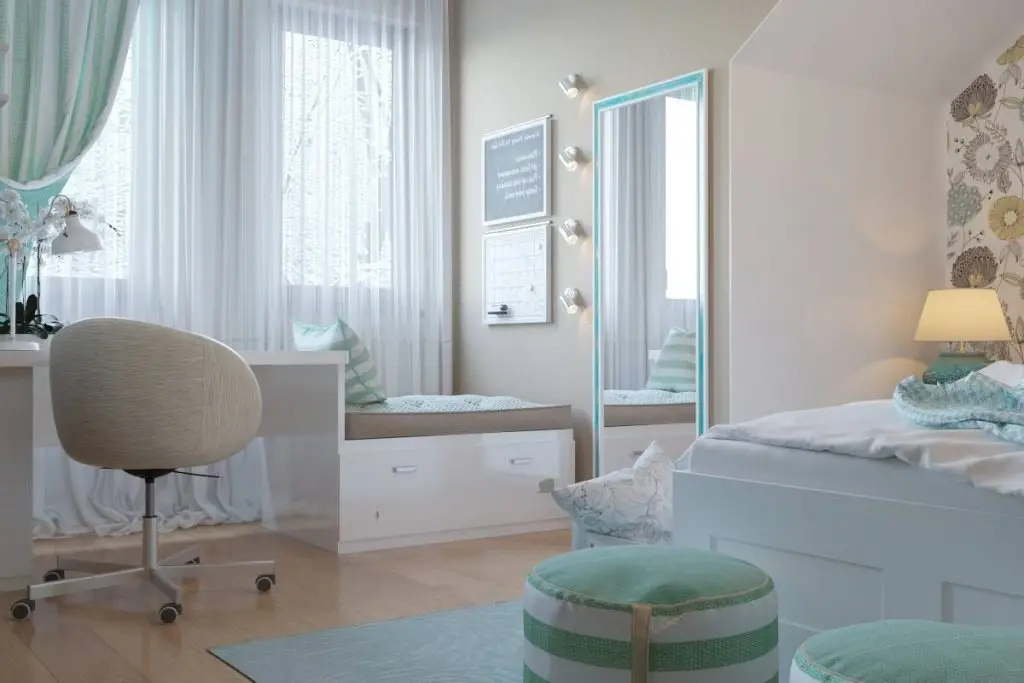
Second, the door to the kids' room must not lock from the inside.
Third, conceal all electrical wiring securely inside walls or under the floor, and equip all outlets with protective plugs or safety shutters.
Fourth, pay close attention to window design—it is ideal if the sashes lock with a key, and window safety guards are a must.
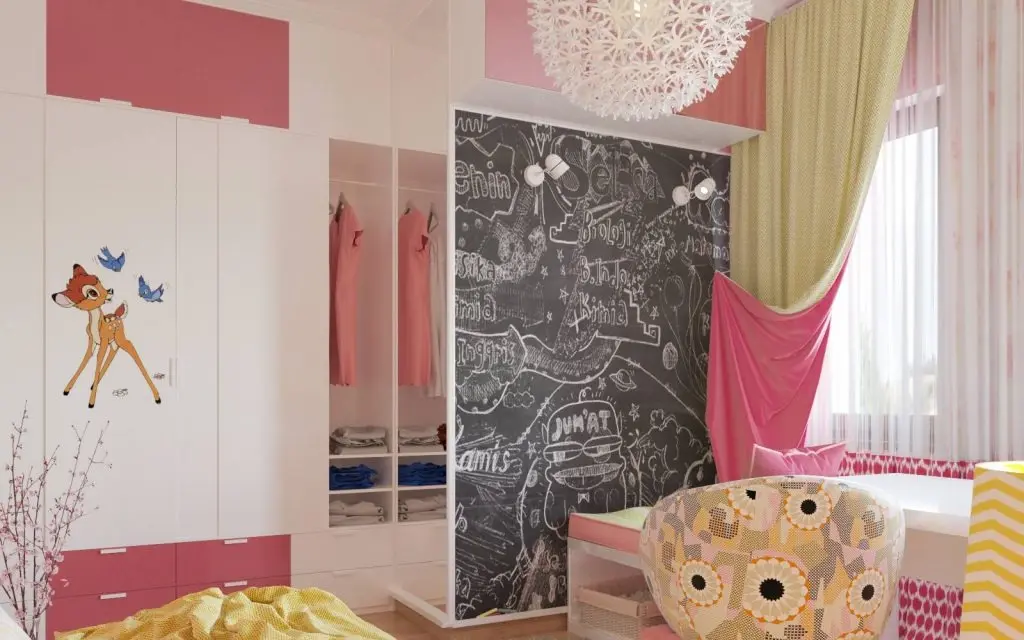
Fifth, platform structures and bunk beds are a great option for a kids' room, but only if your child is over 4 years old.
FOSTERING INDEPENDENCE
Remember that a child's room is their own microcosm, which means they are the master of this space. Make sure to choose furniture (especially storage units) that your little one can easily use on their own.
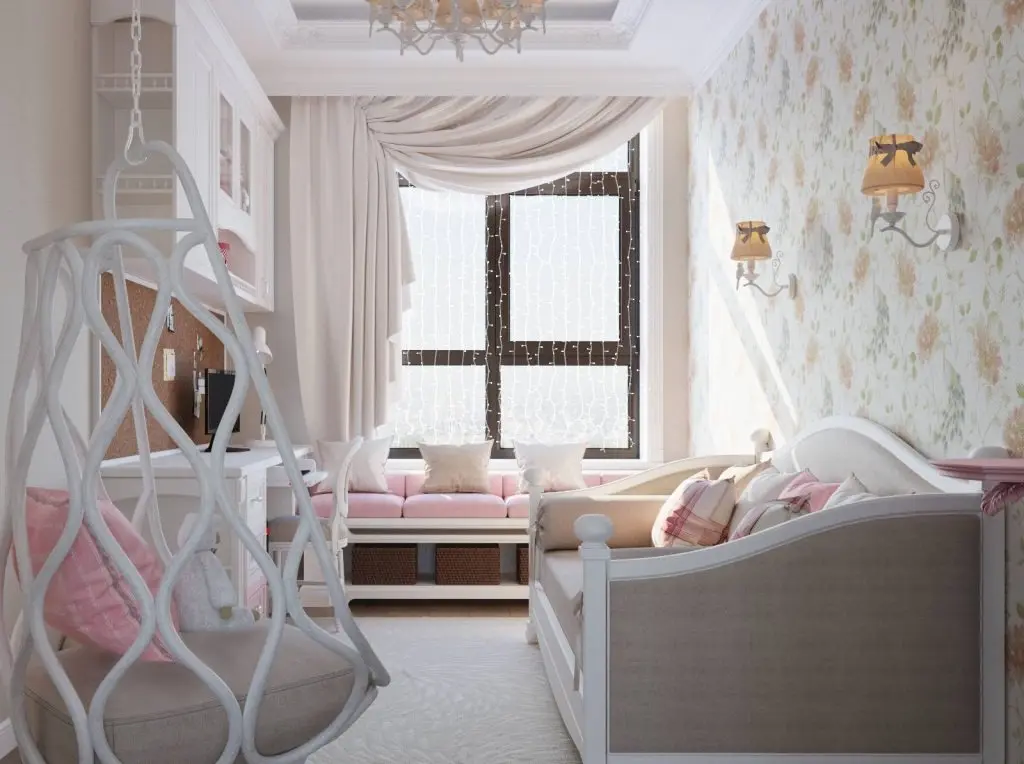
Instead of bulky wardrobes that eat up space, opt for light shelving units or utilize pull-out drawers under the bed, desk, or bench. Various hanging storage solutions—baskets, pockets, sections, modules—save space effectively and fit seamlessly into a child's room design. Whatever you choose, everything should be convenient and accessible for the room's owner.
FLOORING
I do not recommend wall-to-wall carpeting in a kids' room—this material requires constant maintenance and tends to collect a lot of dust, which is harmful to a child. Great alternatives include natural wood, laminate, or cork. If you are concerned about the hardness of these materials, you can always place a small rug and scatter floor cushions in the play area.
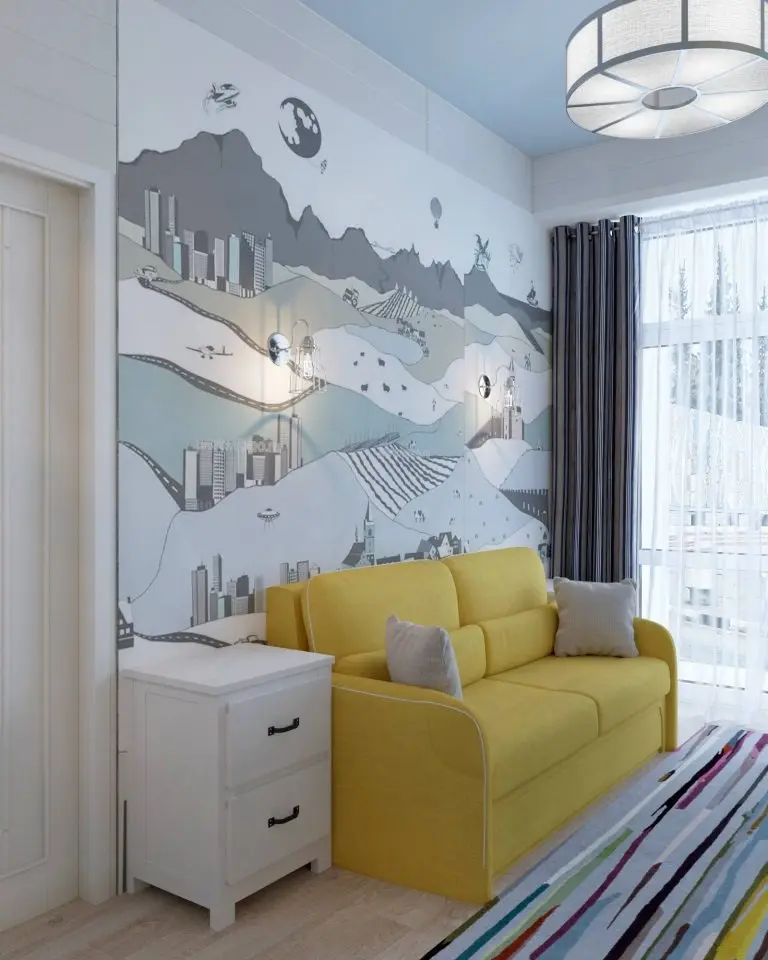
BREATHABLE CEILINGS
In my opinion, the best option for a kids' room is a simply painted ceiling using specialized formulas, such as acrylic paint.
COLOR PSYCHOLOGY
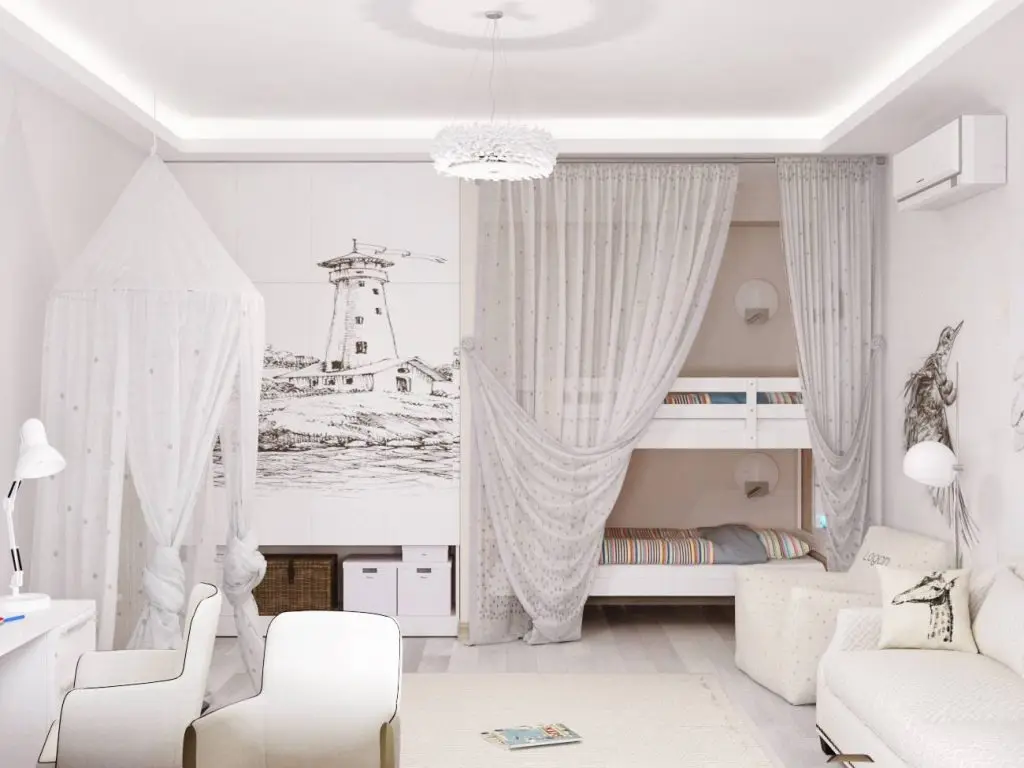
Choosing a color palette for a kids' room is never easy. On one hand, parents want this space to harmonize with the rest of the home. On the other hand, your little princess might only want pink shades…
A neutral color palette complemented by vibrant accents makes an ideal compromise. The formula is simple: movable items should be bright, while fixed elements should stay in pastel and monochrome tones.
LIGHTING DESIGN
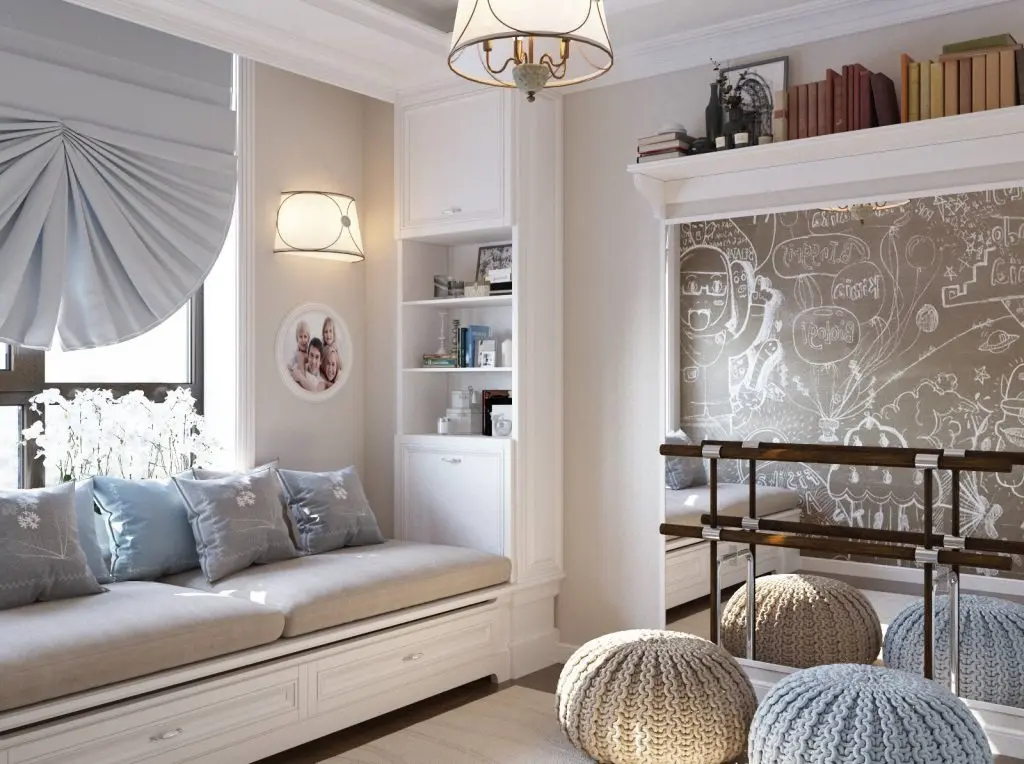
A classic approach that always works: one main overhead light source (a chandelier) and task lighting in dedicated areas (play, study, sleep). Most importantly: you MUST NOT use LEDs and halogen bulbs. Children's eyes (especially young ones) are not yet ready for such intense lighting.
Krypton bulbs with frosted glass or a three-band phosphor coating (4200 K) are ideal for a kids' room. For safety reasons, it is best to place outlets higher up (150–160 cm from the floor).
SPARKING INTEREST
For any designer, creating a kids' room is an exceptionally creative, albeit complex, process! There are virtually no limits to your imagination here. The key goal is to capture the child's interest! A professional will always find a way to add something special, joyful, and childlike to the room.
Draw on the walls, craft custom decor, introduce playful accessories, hang cheerful art and posters, use chalkboard surfaces—children love all of this. They can create alongside you. In a kids' room, the walls are above all a canvas for creativity!
When designing a kids' room, as I mentioned, it is essential to balance creativity and safety measures, bridging the inner child and the responsible adult—and that is exactly how a professional designer works.